Focused arrival windows
Useful updates and clear arrival timing.
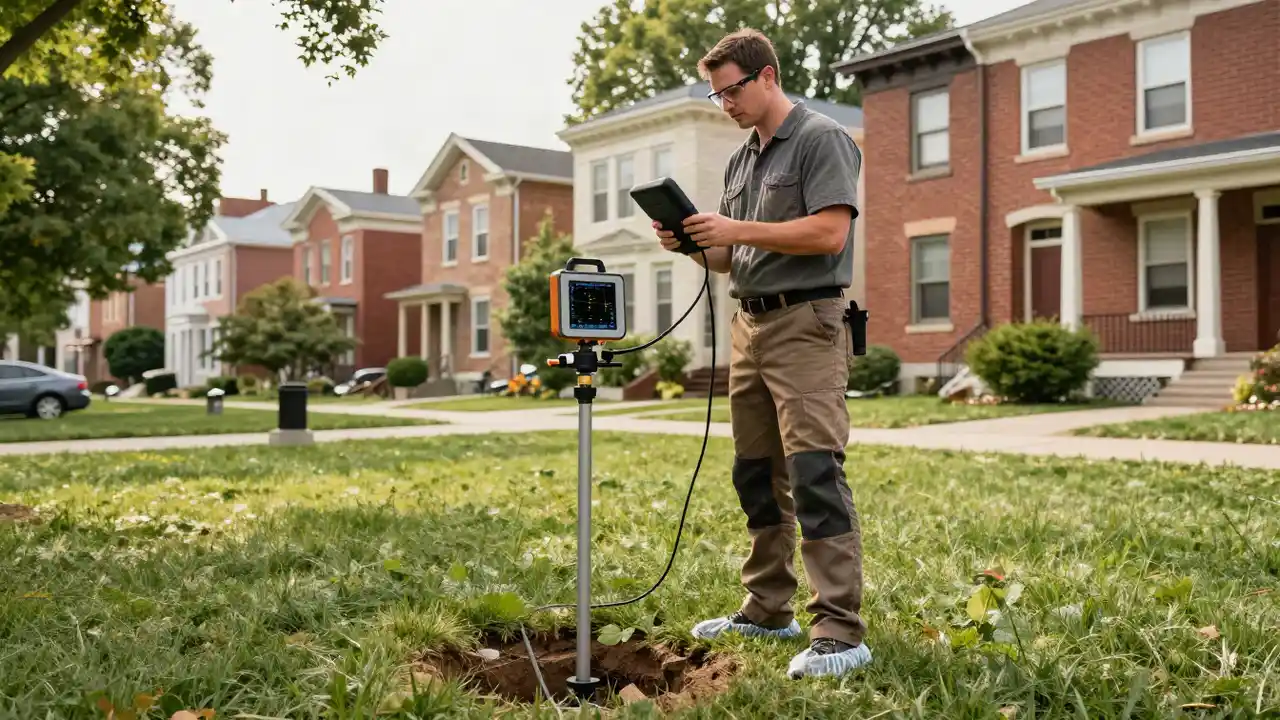
Slab Leak Detection in Pittsburgh starts with pinpointing the exact break under your floor before we cut a single tile. We use acoustic listening devices and thermal imaging cameras to find the leak, then handle slab leak repair in Pittsburgh PA the same visit whenever parts allow. If your water bill jumped and your floor stays warm, call us now.
Useful updates and clear arrival timing.
Review the approach and price before deciding.
Equipped vehicles and respectful cleanup.
Neighbors serving neighbors with follow-through.
Every detection visit comes with the full diagnostic package, not a quick listen and a guess. If you approve the repair, the detection fee is credited toward the work. Here is what is covered, and what we quote separately if you need it.
We isolate the main line and pressurize it to confirm the leak is under the slab and not in a fixture, irrigation line, or water heater. This takes 20 to 30 minutes and gives you a yes-or-no answer before any cutting starts.
We walk the slab with acoustic listening devices and a thermal imaging camera to mark the leak within about 6 inches. You see the screen and hear the audio before we commit to an access point.
Once we have the location, you get a flat price for the repair, including concrete cutting, pipe replacement, backfill, and patch. No hourly billing, no change orders unless we hit something nobody could see.
We use a wet saw to cut a 12-by-12 inch access point, which controls silica dust and keeps the patch small. Most homeowners can cover it with the same flooring or a single replacement tile.
After the new pipe section is in, we pressurize to 80 psi and hold for 15 minutes. If it holds, we backfill and patch. You get a written summary and a two-year warranty on the under-slab repair.
Share what is happening and receive a clear next step from the local team.
Slab Leak Detection in Pittsburgh is the process of locating a water leak in the pipes that run beneath your concrete foundation. We start by confirming the leak with a moisture meter and pressure testing kit, then narrow the location with acoustic listening devices, thermal imaging cameras, and a video pipe inspection camera. Once we mark the spot, we open the smallest possible access point and repair the copper pipe, PEX tubing, or PVC pipe underneath. Most jobs take two to four hours from arrival to water back on.
Pittsburgh homes sit on some of the oldest housing stock in Pennsylvania, and a lot of it still runs original copper under the slab. Freeze-thaw cycles in Allegheny County stress those lines every winter, and the clay-heavy soil in neighborhoods like Brookline and Mount Washington shifts enough to crack fittings. That is why under slab leak detection Pittsburgh PA homeowners call us for is often the only way to catch a leak before it warps flooring or floods a basement. If you are searching for slab leak detection near me Pittsburgh, we cover the whole city.
You describe the symptoms: high water bill, warm floor, sound of running water with everything off. We ask a few questions to rule out a running toilet or irrigation leak, then book a window. Most Pittsburgh calls get a same-day slot, and emergency calls after 10 p.m. get a technician dispatched within 90 minutes.
On arrival we shut off every fixture, watch the meter, and run a pressure testing kit on the main line. If the needle drops, the leak is real and it is on the supply side. We also check with a moisture meter at the base of walls and cabinets. This step takes 20 to 30 minutes.
We walk the slab with acoustic listening devices and a Sewerin tracer gas detector to hear and smell where water is escaping. A Fluke thermal imaging camera shows the warm trail under the floor. We mark the spot with tape and show you the reading before we cut anything.
We cut a 12-by-12 inch access point with a wet saw to control dust, then dig down to the pipe. Copper gets a new section soldered in with couplings; PEX gets a clean splice. We use pipe clamps and epoxy sealant only where code allows. This stage runs one to two hours.
We pressurize the repaired line to 80 psi and hold it for 15 minutes. If it holds, we backfill with sand, patch the concrete, and leave the area clean. You get a written summary of the repair and a warranty on the work. Total time on site is usually three to four hours.
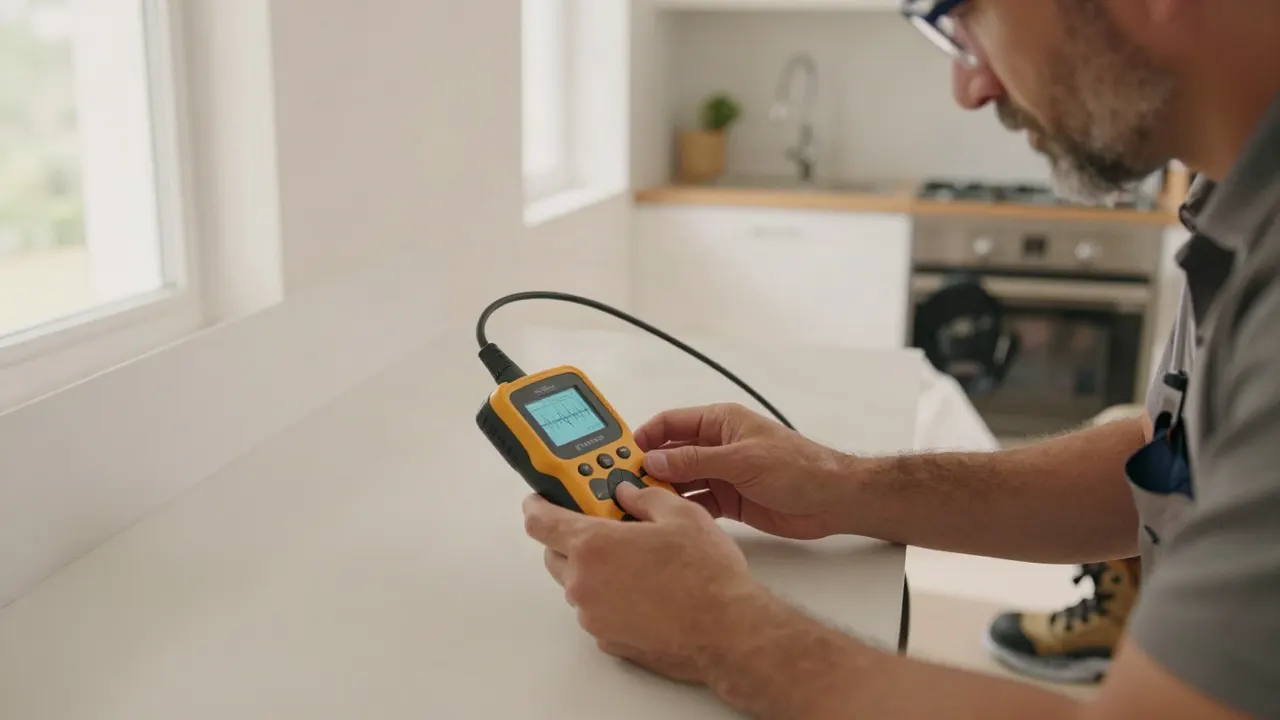
We place these discs on the slab to hear the specific frequency of pressurized water escaping a pipe. They work through tile, hardwood, and up to 8 inches of concrete.
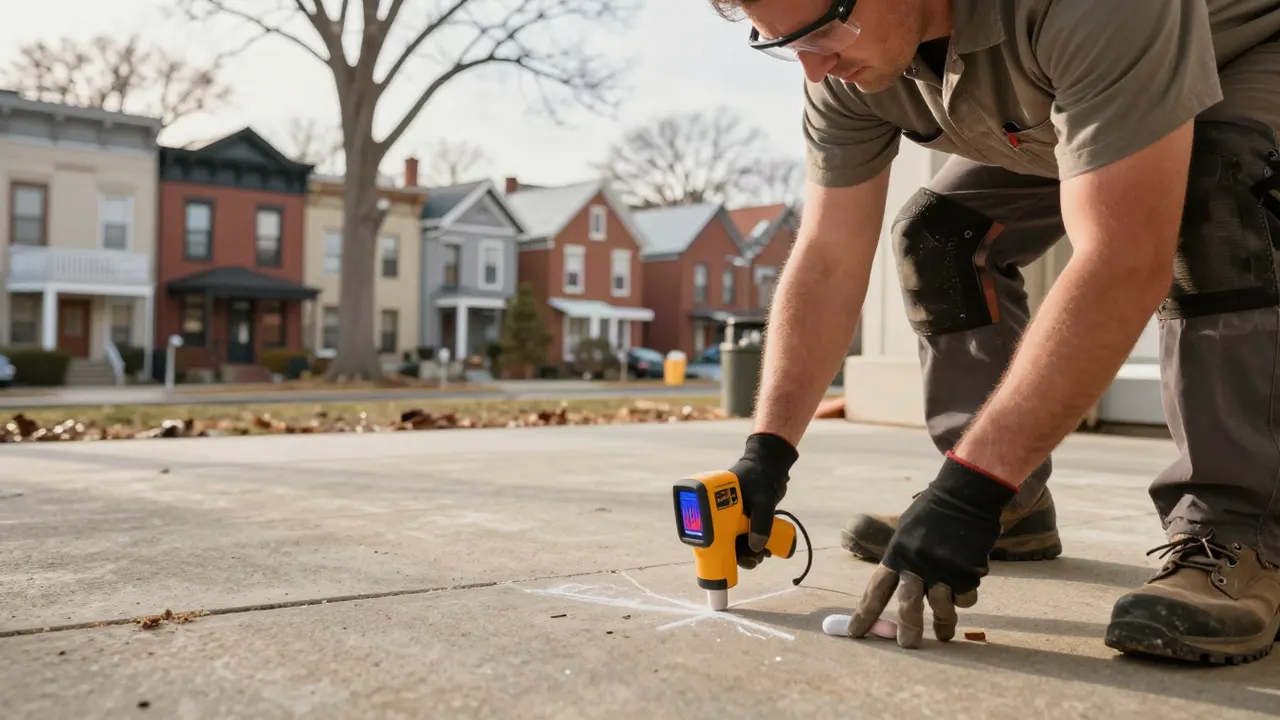
Hot-water leaks leave a warm trail under the floor. The Fluke camera shows that trail on screen so we can mark the leak location without cutting.
For stubborn leaks that acoustic tools cannot isolate, we introduce a safe tracer gas into the line and sniff for it at the surface. This pinpoints the break within inches.
We isolate the main line and pressurize it to confirm the leak is under the slab. A dropping gauge tells us the leak is real and on the supply side.
A camera on a reel lets us look inside the pipe to find cracks, corrosion, or root intrusion. This is especially useful on older copper lines in Allegheny County homes.
We use wet saws and RIDGID pipe cutters to open the slab and cut the failed pipe cleanly. Wet cutting controls silica dust and keeps the work area safe.
We walk the slab in a grid, listening for the loudest point of the leak. By comparing readings across the floor, we narrow the location to a 6-inch circle before we mark it. This is the fastest way to find a slab leak without exploratory demolition.
Hot-water leaks warm the concrete around them. We scan the floor with a Fluke camera and map the temperature gradient. The hottest point is usually directly above the break, which tells us where to cut.
We close every fixture and pressurize the main line to 80 psi. If the gauge drops, the leak is confirmed. We then isolate sections to determine whether it is under the slab, in a wall, or in the yard.
When acoustic and thermal readings disagree, we inject a safe tracer gas into the line and sniff at the surface with a Sewerin detector. The gas escapes at the break, giving us a final confirmation before we cut.
We dispatch a technician within 90 minutes, confirm the leak with a pressure test, and pinpoint it under the hallway slab using acoustic equipment. We cut one access point, replace a failed copper elbow, and pressure-test to 80 psi. Water is back on the same night, the access point is patched by morning, and the next bill drops back to the normal $85 range.
We run a thermal scan and find the leak is on the hot-water line under the bathroom floor. We schedule the repair for a tenant-friendly window, cut a small access point, and replace the section with PEX. The repair is done in three hours, the tenant never loses water service for more than 45 minutes, and the warm spot is gone.
We pressure-test the slab lines, confirm an active leak, and pinpoint it with a video pipe inspection camera. We repair the pipe, document the work with photos, and provide a written summary for the closing file. The sale closes on schedule, the buyer gets a documented repair with a two-year warranty, and the seller avoids a price renegotiation.
Pittsburgh is a city of hills, rivers, and old houses. That combination creates slab leaks that behave differently than in newer Sun Belt cities. Our freeze-thaw cycles run from November through March, and the ground under Allegheny County homes moves enough to stress copper pipe at every fitting. Homes built before 1950 often have original copper under the slab, which means pinhole leaks and cracked elbows are common. Newer builds on the North Shore and in the South Side Works area use PEX, which fails differently, usually at crimp rings. We adjust our detection approach based on what we find. If you are searching for how to detect a slab leak in Pittsburgh PA, the answer is the same every time: pressure-test, listen, scan, and confirm before you cut. We also coordinate with Pittsburgh Water and Sewer when a leak affects the main, and we follow Allegheny County Plumbing Certification rules on every repair.
Older commercial buildings and converted lofts often have slab leaks in original copper. We work nights and weekends to avoid disrupting businesses.
Newer construction uses PEX under the slab. Leaks here usually trace to crimp rings or manifold fittings, which we can repair without a full line replacement.
Post-war housing with shallow slabs and original copper. Freeze-thaw cycles crack fittings here more than anywhere else we work.
Steep lots and retaining walls mean drainage issues can mimic slab leaks. We pressure-test first to rule out groundwater before cutting.
Ground movement stresses under-slab copper and opens pinhole leaks at fittings. We see a spike in calls from December through February and stock repair parts for those months.
Clay holds water against the foundation and shifts with moisture. That movement can crack a slab or shear a pipe. We account for it when we choose repair materials.
Copper pipe from the 1920s through the 1950s is thinner than modern stock and more prone to pinhole leaks. We inspect the surrounding pipe during repair and flag any sections that are close to failing.
A family of four in Brookline saw their water bill jump from $85 to $340 in two months. They heard water running at night with every fixture off. The floor in the hallway was warm to the touch, and the hardwood was starting to cup.
We confirmed the leak with a pressure test, pinpointed it under the hallway with acoustic equipment, and replaced a failed copper elbow. Total time on site was three hours. The next bill came in at $88, and the hardwood dried flat without replacement.
Maintenance: We recommended a yearly pressure test and a watch on the water meter. If the meter spins with the house off, call us before the bill climbs again.
A landlord on the North Shore had a tenant reporting a warm strip on the bathroom tile and a musty smell in the closet behind it. The building was built in 2008 with PEX under the slab, and no one could find the source.
Our thermal camera traced the warm trail to a failed crimp ring on the hot-water manifold. We cut a 12-by-12 access point, replaced the fitting, and pressure-tested to 80 psi. The repair took two hours and the tenant kept water service for all but 45 minutes.
Maintenance: We suggested the landlord have the manifold inspected every two years. PEX crimp rings are the most common failure point in newer Pittsburgh builds.
A homeowner in Mount Washington was three days from closing when the buyer's inspector flagged moisture at the base of the basement wall. The seller had no idea there was a leak and worried the deal would fall through.
We pressure-tested the slab lines, confirmed an active leak on the cold-water side, and pinpointed it with a video pipe inspection camera. We repaired the pipe in one visit, documented the work with photos, and provided a written summary for the closing file. The sale closed on time.
Maintenance: The buyer received a two-year warranty on the repair. We recommended they keep the written summary with the home records for future resale.
Most slab leaks show up as one of these four problems. Each one gets worse with time, and each one has a fix that does not require tearing your house apart.
An under-slab leak can waste 40 to 200 gallons a day, which adds $60 to $300 to your monthly Pittsburgh Water and Sewer bill and never stops on its own. We pressure-test the main line, confirm the leak, and pinpoint it with acoustic and thermal tools. Once located, we repair the pipe and re-test. Most customers see their bill return to normal within one billing cycle.
Hot water under the slab warps hardwood, lifts tile, and feeds mold in the subfloor. Left alone, the repair can grow from a pipe fix into a full flooring replacement. Our thermal imaging camera maps the spread so we know exactly how far the water has traveled. We repair the pipe, dry the affected area, and give you a clear picture of what flooring needs to be replaced versus what can stay.
That hiss is pressurized water escaping a cracked fitting or pinhole in copper pipe. It will not seal itself, and the constant moisture weakens the concrete around it. We use acoustic listening devices and a Sewerin tracer gas detector to isolate the sound and confirm the break. Then we open a small access point, replace the failed section, and pressure-test to 80 psi before backfill.
A spinning meter with every fixture closed means water is moving somewhere it should not. It could be a slab leak, an underground line, or a pool line, and guessing wastes money. We isolate sections of the system one at a time to determine whether the leak is under the slab, in the yard, or at the pool. Once we know, we quote the right repair. No cutting until we have the answer.
$180 - $1,800 depending on scope
Typical 2026 pricing for slab leak detection in Pittsburgh runs $180 to $450, and we credit that fee toward the repair if you hire us. The repair itself usually lands between $600 and $1,800 depending on slab depth, pipe material, and how much concrete we have to open. We quote a flat price before we cut, so you are never watching a clock. If you are looking for affordable slab leak detection in Pittsburgh, the cheapest option is the one that finds the leak the first time.
You are paying for a pinpoint location, a code-correct repair, and a pressure test that proves it holds. That is cheaper than replacing a floor, a foundation, or a water-damaged basement. We credit the detection fee toward the repair, so the diagnostic pays for itself.
A 4-inch slab with carpet is faster to open than an 8-inch slab under tile or stone. Thicker slabs and hard finishes add cutting time and require more careful patching, which raises the price.
Copper repairs need soldering and often a new section of pipe. PEX repairs are faster and use crimp fittings. PVC drain leaks under a slab can require more excavation because the pipe is larger and the break is often at a joint.
A leak in an open hallway is easier to access than one under a cabinet, a closet, or a load-bearing wall. Location drives how much concrete we cut and how much flooring needs to be replaced.
Older copper lines sometimes fail in more than one spot. If we find a second leak during the same visit, we quote it separately. Fixing both at once is cheaper than two separate mobilizations.
Standard weekday appointments carry our base rate. After-hours, weekend, and holiday calls carry a dispatch premium, but the detection fee is still credited toward the repair.
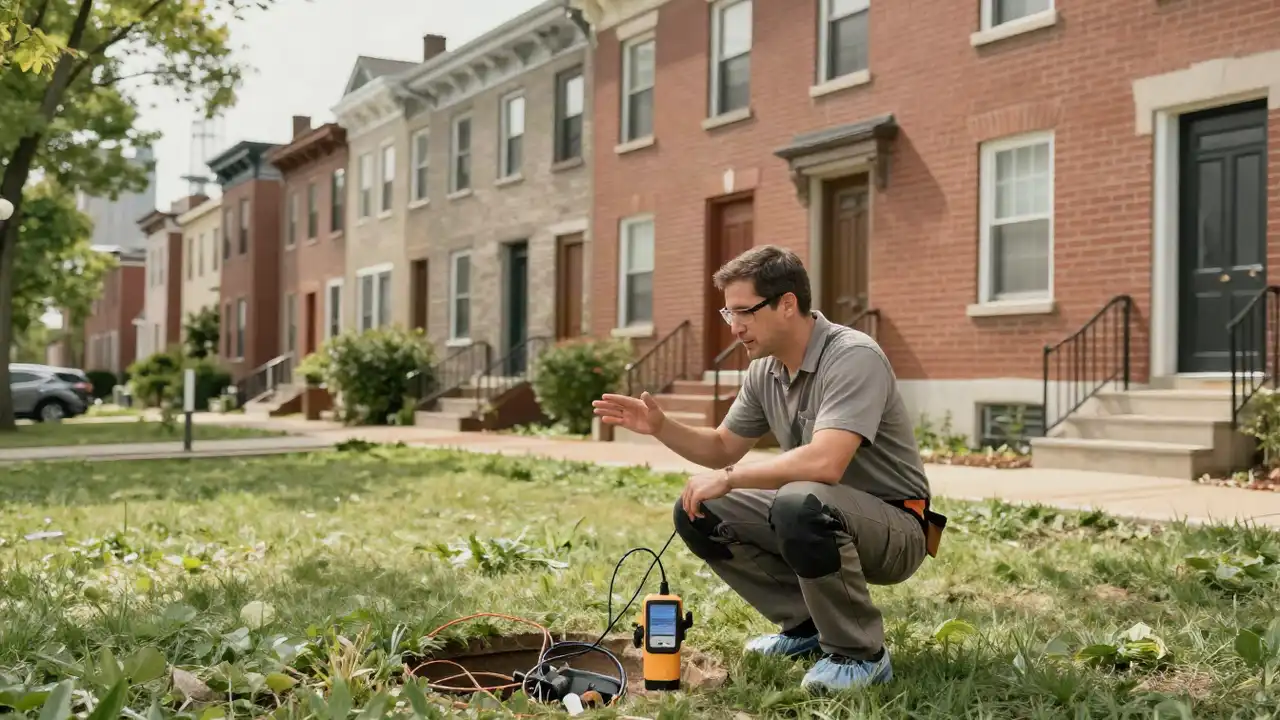
Our technicians carry PA Plumbing License credentials and hold IAPMO Certification for pipe installation and repair. We work Allegheny County every week, from century-old homes in the South Side to newer builds on the North Shore. That local experience matters because Pittsburgh slabs are not all the same: some are post-tension, some are poured over a crawl, and some hide original copper that has already been patched twice. We read those clues before we cut, which is why our first-visit success rate on slab leak locator Pittsburgh jobs stays high. We also hold Backflow Prevention Certification and follow OSHA Safety Compliance on every site.
Our water bill doubled in two months and we could not figure out why. Leak Fix Pros came out the same day, used a thermal camera, and found the leak under our kitchen tile in about 40 minutes. They cut one small square, replaced the copper, and had water back on before dinner. Bill went right back to normal.
We had a warm spot on the floor for weeks and kept putting it off. These guys confirmed it with a pressure test, showed us the reading, and gave a flat price before cutting. The repair took three hours and they cleaned up better than they found it. Worth every dollar.
I manage six rentals and slab leaks are my nightmare. Leak Fix Pros has handled three for me now, always with the same process: pinpoint, quote, repair, pressure-test. They send photos and a written summary every time, which keeps my owners happy. I do not call anyone else.
Most slab leak detection in Pittsburgh runs $180 to $450 in 2026, and that fee is credited toward the repair if you hire us. Price depends on slab thickness, how many rooms we have to scan, and whether the leak is on the supply or drain side. We quote the detection fee on the phone before we roll a truck, so there are no surprises.
The three clearest signs are a water bill that jumped 20 percent or more, a warm spot on the floor, and the sound of running water when every fixture is off. If you hear hissing under tile or your meter spins with the house shut down, you likely have an under-slab leak. Call us and we will confirm it with a pressure test.
Slab leak repair in Pittsburgh PA means opening the concrete, exposing the failed pipe, and replacing the damaged section with new copper or PEX. We cut a small access point, make the repair, pressure-test to 80 psi, then backfill and patch the slab. Most repairs are finished in one visit of three to four hours.
Many Pennsylvania policies cover the water damage and access costs but not the pipe repair itself. Coverage depends on your carrier and whether the leak was sudden or long-running. We document the leak location, cause, and repair with photos and a written report you can hand straight to your adjuster. Call your agent before we start if you plan to file.
Not seeing your question? Our local team can help you understand urgency, scheduling and what to expect.
Ask the local team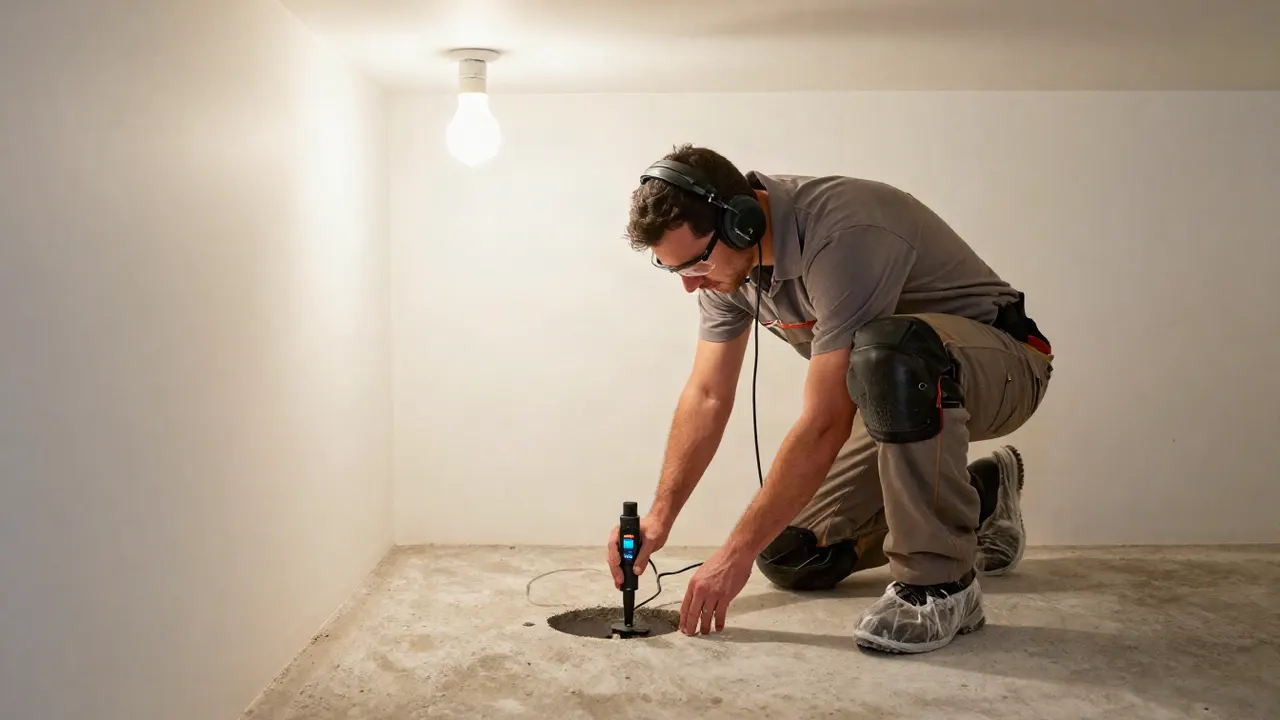
Not every leak is under the slab. Our water leak detection service covers supply lines in walls, ceilings, and crawl spaces across Pittsburgh. We use the same acoustic and thermal tools, so if the slab comes back dry we can keep hunting until we find the source.
View servicePittsburgh pools lose water to evaporation and to hidden leaks in the plumbing beneath the deck. We pressure-test pool lines and use leak detection dye to isolate the break. If your pool drops more than a quarter inch a day, that is a leak, not evaporation.
View service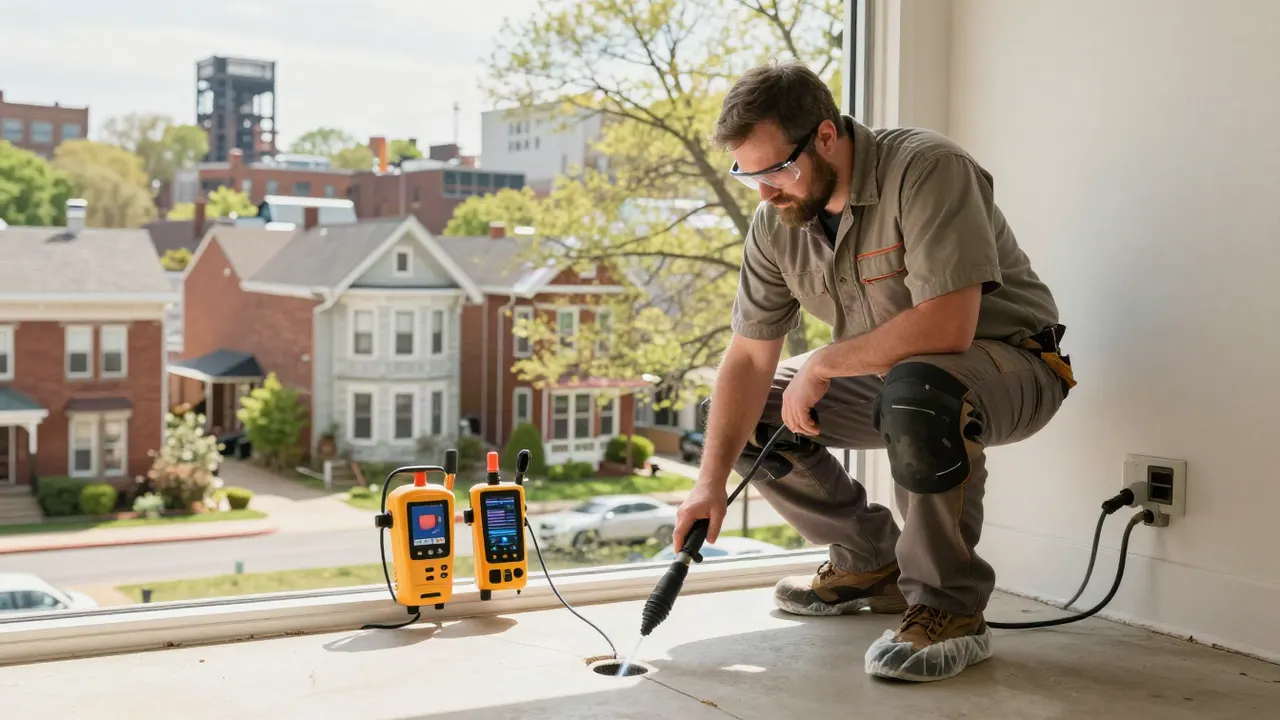
Water and sewer lines running through your yard fail the same way slab pipes do. We trace underground plumbing with pipe locators and tracer gas, then mark the dig point. This pairs well with slab work when the leak is outside the foundation.
View service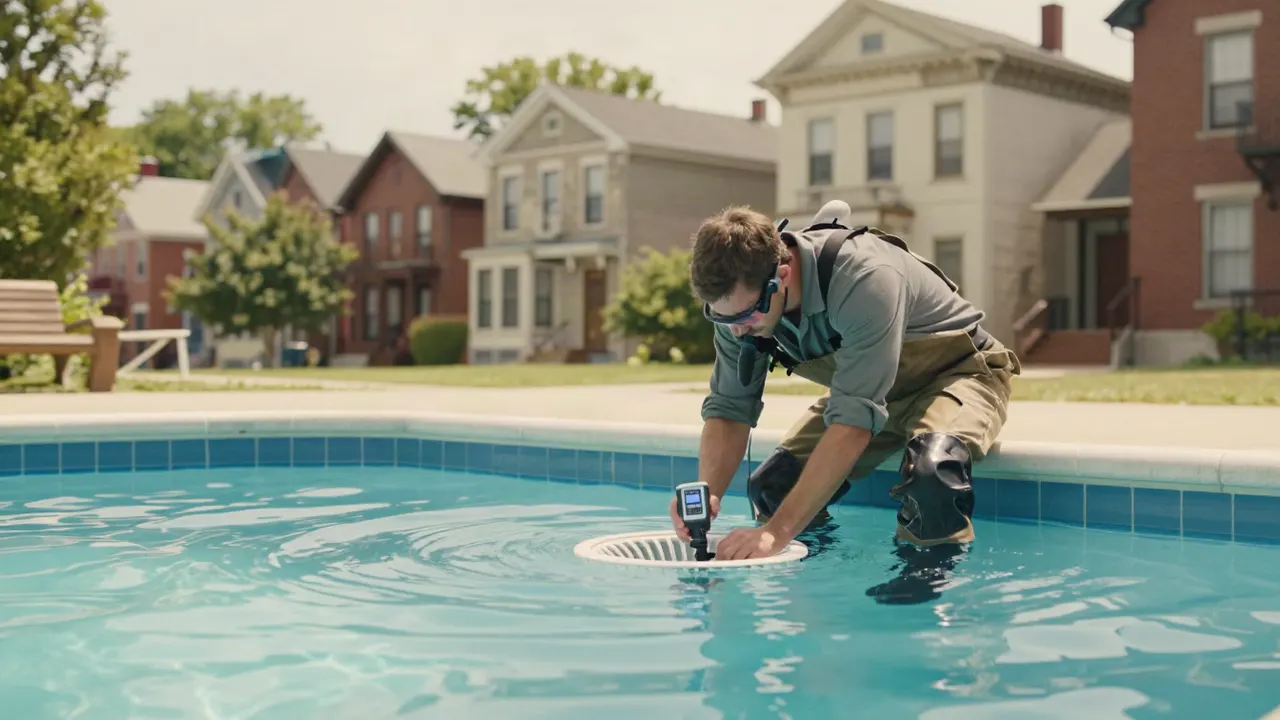
Acoustic leak detection is the core of how we find hidden leaks without tearing up your home. Our LeakTronics and Sewerin equipment listens for the specific frequency of water escaping a pipe under pressure. It works through concrete, tile, and hardwood.
View serviceReach us any hour at (412) 939-1638. We answer live, ask a few questions about what you are seeing, and book a window that works. Most Pittsburgh addresses get a same-day slot, and active leaks get priority dispatch.